
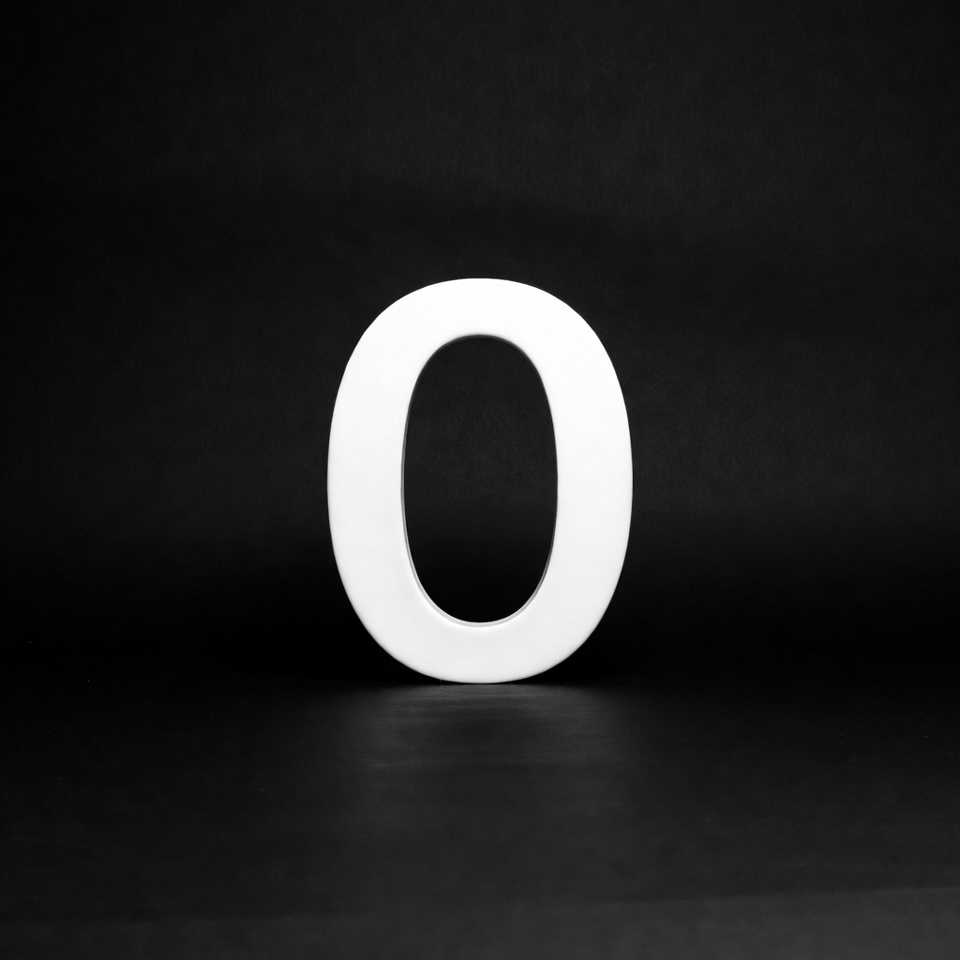
Is Zero Even Or Odd? Why 0 Is An Even Number
The short version
- Zero is even. It’s divisible by 2 with no remainder: 0 ÷ 2 = 0, remainder 0.
- Zero can be written as 2 × 0, and any number you can write as 2 times a whole number is even.
- On the number line, odd and even take turns: -3 odd, -2 even, -1 odd, 0 even, 1 odd. Zero sits right in the even slot.
- People mix it up because zero is neither positive nor negative. That’s a separate question from even or odd.
Is zero even or odd? Zero is even. A number is even when you can split it into two equal whole-number groups with nothing left over, and 0 splits into 0 and 0 with nothing left over. Every math textbook, every standardized test, and every math teacher will count 0 as an even number.
If your kid came home saying “zero is neither,” they’re probably mixing it up with a different fact about zero. Below we show four quick ways to prove 0 is even, the mistakes that cause the confusion, and some practice problems with answers.
What makes a number even or odd?
An even number is any integer that divides by 2 with a remainder of 0. Another way to say it: an even number equals 2 times some integer. So 6 is even because 6 = 2 × 3, and -10 is even because -10 = 2 × (-5).
An odd number is any integer that leaves a remainder of 1 when you divide it by 2. It’s always one more than an even number. So 7 is odd because 7 = 2 × 3 + 1.
Every integer is one or the other. There’s no third category. That word “every” matters, because it means zero has to be even or odd. It can’t opt out.
For whole numbers, the fastest test is the last digit:
| Last digit | Even or odd | Examples |
|---|---|---|
| 0, 2, 4, 6, 8 | Even | 30, 52, 1,004, 96, 0 |
| 1, 3, 5, 7, 9 | Odd | 41, 63, 205, 77, 9 |
Notice that 0 is on the even list of last digits. Kids already accept that 10, 20 and 100 are even because they end in 0. The number 0 itself ends in 0 too.
Four ways to prove zero is even
You only need one of these to settle “is zero even or odd,” but different kids click with different ones.
1. Divide it by 2
0 ÷ 2 = 0 with a remainder of 0. No remainder means even. Compare that to 5 ÷ 2 = 2 remainder 1, which is why 5 is odd.
2. Write it as 2 times something
0 = 2 × 0. Since 0 is an integer, 0 fits the definition of even exactly the same way 8 = 2 × 4 does.
3. Look at the number line
Even and odd numbers alternate with no breaks. Walk left from 4:
4 even, 3 odd, 2 even, 1 odd, 0 even, -1 odd, -2 even, -3 odd
If 0 were odd, you’d have three odd numbers in a row (1, 0, -1), which would break the pattern everywhere else. If 0 were “neither,” you’d have a hole in the pattern. The only answer that keeps the pattern working is even.
4. Use the sum rules
Kids learn these rules for adding and subtracting:
- even + even = even
- odd + odd = even
- odd – odd = even
- even + odd = odd
Now try 7 – 7. That’s odd minus odd, so the rule says the answer is even. The answer is 0. Or try 3 + (-3), odd plus odd, which also has to be even. It’s 0 again. If zero weren’t even, these rules would fail every time a number is subtracted from itself.
A pairing picture works well for younger kids. Put a handful of counters on the table and try to pair them up. Six counters make three pairs with none left over, so 6 is even. Seven counters leave one alone, so 7 is odd. Zero counters leave nobody without a partner, so 0 is even. It feels like a trick, but it’s the same rule.
Is zero even or odd? Why people get it wrong
The question “is 0 even” shows up in search thousands of times a month, and it’s a fair question. Here’s where the doubt usually comes from.
- Zero is neither positive nor negative. That’s true, and it’s easy to blur into “zero is neither even nor odd.” Positive/negative and even/odd are two different sorting systems. Zero sits on the fence in the first one and lands firmly in “even” in the second.
- Zero feels like “nothing.” Kids think of even as “you can share it fairly.” Sharing nothing feels strange, but splitting 0 cookies between two kids gives each of them 0, and that’s a fair share.
- Counting starts at 1. Many kids first learn evens as “2, 4, 6, 8,” so 0 never appears on the list. Starting at 2 is just a habit. Zero belongs on that list.
- Roulette. On a roulette wheel, a bet on “even” loses when the ball lands on 0. That’s a house rule for the game. It says nothing about the math.
Is zero an even number? Worked examples
These show how the parity of zero comes up in real homework.
Example 1: Is 0 × 13 even or odd?
0 × 13 = 0
0 ÷ 2 = 0 remainder 0
Answer: even. In fact any whole number times an even number is even, and 0 counts as that even number.
Example 2: Circle the even numbers: -6, -1, 0, 5, 12.
-6 = 2 × (-3), even
-1 = 2 × (-1) + 1, odd
0 = 2 × 0, even
5 = 2 × 2 + 1, odd
12 = 2 × 6, even
Answer: -6, 0 and 12.
Example 3: How many even numbers are there from 0 to 10, including both ends?
0, 2, 4, 6, 8, 10
Answer: 6. A kid who writes 5 has skipped 0, which is the most common slip on this kind of question.
Example 4: A number n is even. Is n + 1 even or odd?
Even + odd = odd, so n + 1 is odd. Check with n = 0: 0 + 1 = 1, odd. Check with n = 4: 4 + 1 = 5, odd.
Common mistakes
- Answering “neither.” Every integer is even or odd. Neither isn’t an option.
- Leaving 0 off counting questions. “How many even numbers from 0 to 20?” is 11, counting 0. Kids who start at 2 get 10.
- Thinking negative numbers can’t be even. -8 is even for the same reason 8 is: -8 ÷ 2 = -4 with no remainder.
- Mixing up “0 ÷ 2” and “2 ÷ 0.” 0 ÷ 2 = 0, which is fine. 2 ÷ 0 is undefined. Only the first one matters for even and odd.
- Checking the first digit instead of the last. 305 starts with 3 and ends with 5. It’s odd because of the 5. And 3,000 is even because it ends in 0.
Practice problems
- Is 0 even or odd?
- Is 58 even or odd?
- Is -7 even or odd?
- Is 3,090 even or odd?
- Without working it out, is 19 + 19 even or odd? Then check.
- Is 245 – 245 even or odd?
- List every even integer from -5 to 5.
- How many even numbers are there from 0 to 30, including 0 and 30?
Answers
- Even. 0 ÷ 2 = 0 with no remainder.
- Even. It ends in 8, and 58 = 2 × 29.
- Odd. -7 = 2 × (-4) + 1, so it leaves a remainder of 1.
- Even. It ends in 0, and 3,090 = 2 × 1,545.
- Even, because odd + odd = even. Check: 19 + 19 = 38, which ends in 8.
- Even. 245 – 245 = 0, and 0 is even. (Odd minus odd is always even.)
- -4, -2, 0, 2, 4.
- 16. The evens are 0, 2, 4, and so on up to 30. That’s 30 ÷ 2 = 15 numbers from 2 to 30, plus 0, for 16.
If your kid is stuck on even and odd numbers
Getting “is zero even or odd” wrong once is normal. It’s a trick question for plenty of adults. But if your child can’t explain why 14 is even, or keeps guessing on numbers like 96 and 107, the gap is almost always further back.
Even and odd rest on three earlier ideas: skip counting by 2s, division with remainders, and a solid picture of the number line (including negatives, once they reach middle school). A kid who never really got remainders will treat even and odd as a list to memorize, and memorized lists fall apart on edge cases like 0 or -12. Our guide to math skills by grade level shows when each of these usually clicks.
If this is one of several topics that seem shaky, take a look at the signs a child is behind in math. A single missed idea is easy to fix. A pattern of them usually points to one older skill that never set, and a good math assessment can tell you which one.
Frequently asked questions
Is 0 an even number?
Yes. Zero is an even number because it divides by 2 with no remainder and equals 2 × 0.
Is zero an odd number?
No. An odd number leaves a remainder of 1 when divided by 2. Zero leaves a remainder of 0, so it can’t be odd.
Is zero positive or negative?
Neither. Zero is the only integer that is neither positive nor negative. That’s probably where the “zero is neither even nor odd” idea comes from, but it’s a different question.
Is 0 a whole number or a natural number?
Zero is a whole number and an integer. Whether it’s a “natural number” depends on the textbook: some define natural numbers as 1, 2, 3 and so on, and others start them at 0. Check what your child’s class uses.
Can negative numbers be even?
Yes. -2, -4, -6 and so on are all even. -1, -3, -5 are odd. The same divide-by-2 test works for negatives.
Why is it important that zero is even?
Lots of rules depend on it. Odd minus the same odd number gives 0, and the rule says odd minus odd is even. Counting problems, number patterns and later algebra all assume 0 is even.
Find the actual gap
If a question like this trips up your kid, there’s often an older skill behind it, and it’s worth finding. Math Anon starts with a short adaptive assessment that zeroes in on exactly which skills are missing, then gives you a written report you can read in a few minutes.
From there, your child gets targeted practice for about 20 minutes a day, and you get a progress report every week. The assessment is $49, and it’s credited back in full on your first month. Start the assessment or see pricing first.





