
Types Of Angles: Acute, Right, Obtuse, Straight And More
The short version
- The main types of angles are acute (less than 90°), right (exactly 90°), obtuse (between 90° and 180°), straight (exactly 180°), reflex (between 180° and 360°) and full (exactly 360°).
- Angles are named by how far they turn, and side length has nothing to do with it. A tiny corner and a huge corner can both be right angles.
- Angles also come in pairs: complementary angles add to 90°, supplementary angles add to 180°, and vertical angles (opposite each other where two lines cross) are equal.
- To classify an angle fast, compare it to a square corner (90°) and a flat line (180°).
There are six main types of angles, sorted by size: acute, right, obtuse, straight, reflex and full. An acute angle is less than 90°, a right angle is exactly 90°, an obtuse angle falls between 90° and 180°, a straight angle is exactly 180°, a reflex angle falls between 180° and 360°, and a full angle is a complete 360° turn.
That list covers most fourth and fifth grade homework. Middle school adds angle pairs, like complementary and supplementary angles, so we cover those too, along with how to use a protractor, worked examples, common mistakes and practice problems with answers.
The 6 types of angles by size
First, what an angle is
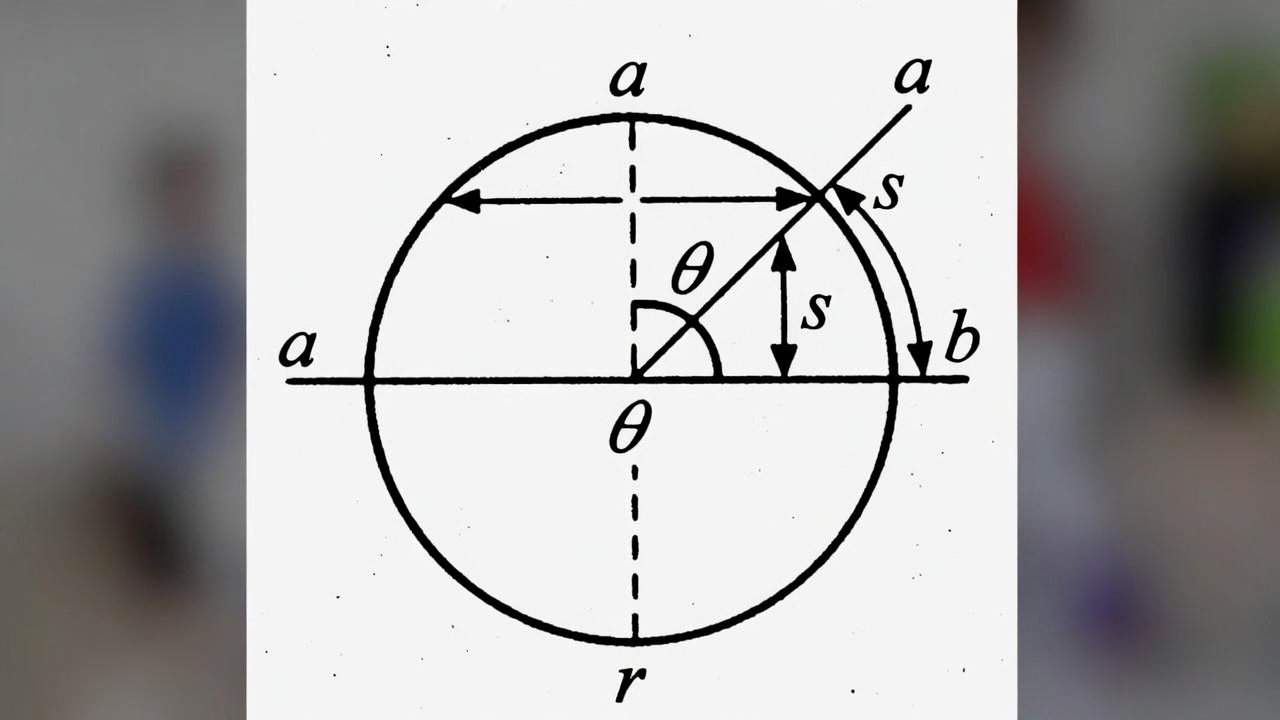
An angle forms when two rays share an endpoint. The rays are the arms (or sides), and the shared point is the vertex. The size of the angle is the amount of turn from one arm to the other, measured in degrees (°). One full turn is 360°.
That “amount of turn” idea is the key to everything below. It’s why a quarter turn is 90°, a half turn is 180°, and why the length of the arms doesn’t matter at all.
The six types at a glance
| Type | Size | Where you’ll see it |
|---|---|---|
| Acute | More than 0°, less than 90° | The tip of a slice cut from a round cake into 8 equal pieces (45°) |
| Right | Exactly 90° | The corner of a sheet of paper; clock hands at 3:00 |
| Obtuse | More than 90°, less than 180° | Clock hands at 4:00 (120°); a laptop screen tipped back |
| Straight | Exactly 180° | Clock hands at 6:00; a flat, open book |
| Reflex | More than 180°, less than 360° | The outside of any angle, like the big way around the clock hands at 4:00 (240°) |
| Full (complete) | Exactly 360° | One full spin, like a minute hand going all the way around |
Some textbooks also list a zero angle (0°), where both arms point the same way, which is why you’ll sometimes see “7 types of angles.”
Acute angles
Anything smaller than a square corner. 1°, 45° and 89° are all acute. If the opening looks “sharp,” it’s probably acute.
Right angles
Exactly 90°. Diagrams mark them with a small square in the corner instead of an arc. Lines that meet at a right angle are perpendicular.
Obtuse angles
Wider than a square corner but not yet flat. 91°, 120° and 179° are all obtuse.
Straight angles
Exactly 180°. It looks like a straight line with a point on it, which is why it confuses kids at first: it doesn’t look like a corner.
Reflex angles
Bigger than a straight line. Every angle drawn on paper has a reflex partner going the long way around. If the small angle is 120°, the reflex angle is 360 – 120 = 240°.
Full angles
Exactly 360°, one complete turn back to where you started.
Types of angles in pairs
Once kids can name single angles, the next step is naming how two angles relate. These pairs show up in almost every middle school geometry unit.
| Pair | Rule | Example |
|---|---|---|
| Complementary | Add to 90° | 30° and 60° |
| Supplementary | Add to 180° | 47° and 133° |
| Vertical | Opposite each other where two lines cross; always equal | 70° and 70° |
| Adjacent | Share a vertex and one arm, with no overlap | Two slices of pizza side by side |
| Linear pair | Adjacent angles that form a straight line, so they add to 180° | 65° and 115° side by side on a line |
A memory trick: C comes before S in the alphabet, and 90 comes before 180. Complementary makes a corner, supplementary makes a straight line. For a full walkthrough of the second one, see Supplementary Angles, Explained.
Later, when parallel lines are cut by a third line, kids meet corresponding, alternate interior and alternate exterior angles. Those build directly on vertical angles and linear pairs.
How to measure and find angles
Using a protractor
- Put the protractor’s center hole (or small crosshair) exactly on the vertex.
- Line up the 0° line with one arm of the angle.
- Follow the other arm up to the curved edge and read the number.
- Use the scale that starts at 0 on the arm you lined up. Most protractors have two rows of numbers going opposite ways.
- Sanity check: if the angle looks sharp, your reading should be under 90. If it looks wide, over 90.
That last step catches the most common protractor mistake, reading 60° as 120° from the wrong scale.
Example 1: classify each angle
35° is acute. 90° is right. 145° is obtuse. 180° is straight. 250° is reflex. 360° is full.
Example 2: find the complement and the supplement
Complement of 28°: 90 – 28 = 62°
Supplement of 47°: 180 – 47 = 133°
Example 3: two crossing lines
Two lines cross, and one angle is 70°. Find the other three.
The angle opposite it is vertical, so it’s also 70°.
Each angle next to it forms a straight line with it: 180 – 70 = 110°.
The four angles are 70°, 110°, 70° and 110°. Check: 70 + 110 + 70 + 110 = 360.
Example 4: angles around a point
Three angles meet at a point: 90°, 130° and x. Angles around a point add to 360°.
90 + 130 + x = 360
220 + x = 360
x = 140°, which is obtuse.
Example 5: clock angles
A clock face is 360° split into 12 hours, so each hour mark is 360 ÷ 12 = 30° apart. At 1:00 the hands make 30° (acute). At 3:00, 90° (right). At 5:00, 5 × 30 = 150° (obtuse).
Common mistakes
- Judging by arm length. Longer arms don’t make a bigger angle. Only the opening counts.
- Calling a tilted right angle “acute.” A right angle turned on its side is still 90°.
- Reading the wrong protractor scale. Start from the 0 that sits on your first arm.
- Mixing up complementary and supplementary. 90 for complementary, 180 for supplementary.
- Thinking 90° is acute or 180° is obtuse. The boundaries have their own names: right and straight.
- Forgetting reflex angles exist. A question asking for “the reflex angle” wants the long way around, which is more than 180°.
Practice problems
- Classify an 89° angle.
- Classify a 91° angle.
- Classify a 270° angle.
- Find the complement of 35°.
- Find the supplement of 112°.
- Two lines cross and one angle is 58°. Find the other three angles.
- What’s the smaller angle between clock hands at 4:00? Name its type. What’s the reflex angle?
- Three angles meet at a point: 75°, 140° and x. Find x and name its type.
Answers
- Acute (less than 90°)
- Obtuse (between 90° and 180°)
- Reflex (between 180° and 360°)
- 90 – 35 = 55°
- 180 – 112 = 68°
- 58° (vertical), and 180 – 58 = 122° for each of the other two: 58°, 122°, 58°, 122°
- 4 × 30 = 120°, obtuse. The reflex angle is 360 – 120 = 240°.
- 75 + 140 = 215, and 360 – 215 = 145°. It’s obtuse.
If your kid is stuck on angles
Angle types are usually taught in fourth grade, when kids start measuring with protractors. If the names won’t stick, the gap is often one of these:
- The idea of an angle as a turn. Kids who think of angles as “pointy shapes” judge by how they look and miss right angles that are tilted.
- Measurement reading, like reading scales on a ruler or protractor accurately.
- Subtracting from 90, 180 and 360, which every angle pair problem needs.
Our math skills by grade level guide shows where geometry and measurement fit in grades 3 to 5. If angles are one of a few topics that aren’t landing, these signs your child is behind will help you see the bigger picture, and our guide to math assessment explains how to find the specific skill that’s missing.
Frequently asked questions
How many types of angles are there?
Six by size: acute, right, obtuse, straight, reflex and full. Some books add the zero angle to make seven. Angle pair names, like complementary and supplementary, are a separate set.
What is a reflex angle?
An angle more than 180° but less than 360°. It’s the “long way around” an ordinary angle. A 100° angle has a 260° reflex angle on its other side.
What type of angle is 180 degrees?
A straight angle. Its arms point in opposite directions and form a straight line.
What’s the difference between complementary and supplementary angles?
Complementary angles add up to 90°. Supplementary angles add up to 180°. So 40° and 50° are complementary, and 40° and 140° are supplementary.
Can a triangle have two right angles?
No. The angles in a triangle add to 180°. Two right angles would already use up all 180°, leaving nothing for the third angle.
Find the actual gap
Geometry trouble often hides a measurement or subtraction problem underneath, and a worksheet on angle names won’t reveal which. Math Anon starts with a short adaptive assessment that checks each underlying skill and gives you a written report of what’s missing.
From there your child practices only those skills, about 20 minutes a day, and you get a weekly report showing progress. The assessment is $49 and fully credited to your first month. Start the assessment or read about pricing.
Related reading
- Supplementary Angles, Explained
- Math Skills By Grade Level: What Your Child Should Know
- Is My Child Behind In Math? 12 Signs By Grade Level
- Mind The Gap: A Parent’s Guide To Math Assessment For Kids
- Corresponding Angles: Definition, Rules And Examples
- Triangle Angle Sum Theorem: How To Find Any Missing Angle





