
Circumference Formula: How To Find Circumference
The short version
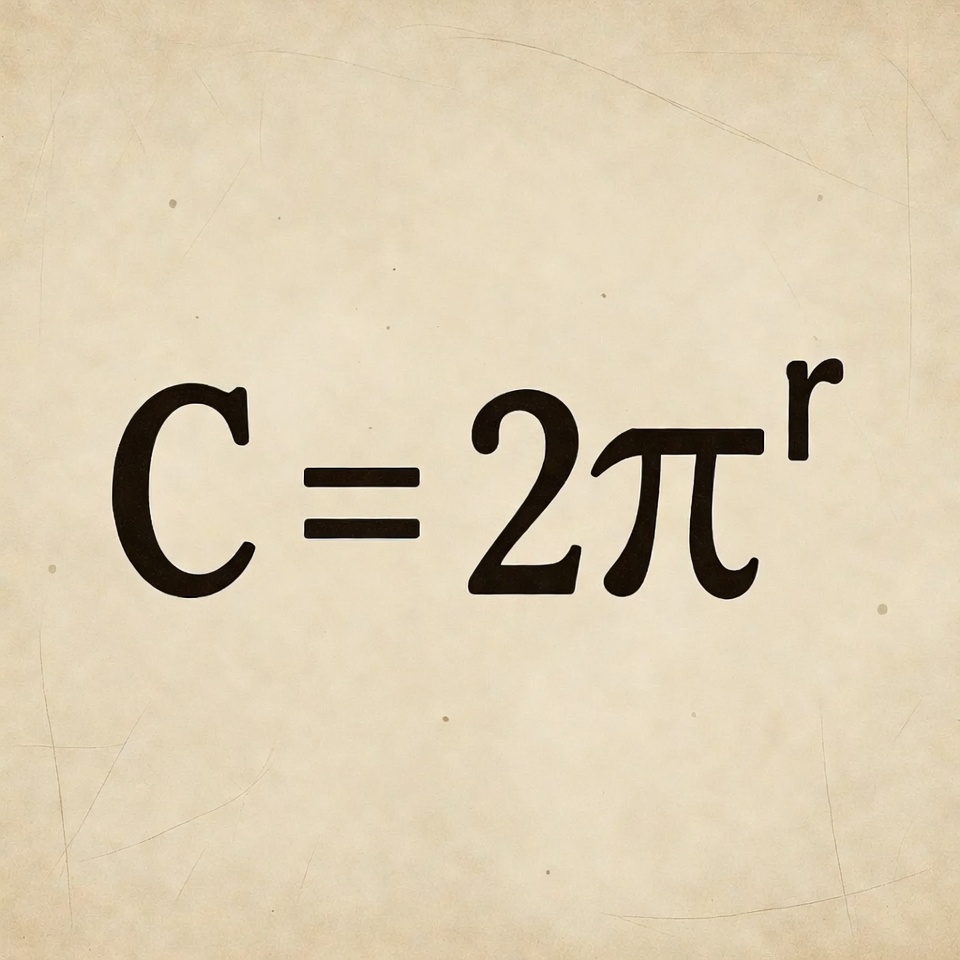
- The circumference formula is C = 2πr when you know the radius, and C = πd when you know the diameter. Both give the same answer because d = 2r.
- Use 3.14 for π in most schoolwork, or 22/7 when the numbers divide nicely. A calculator’s π button is more exact.
- To go backwards from circumference to radius, divide by 2π. To get diameter, divide by π.
- Circumference is the distance around a circle. Area is the space inside, and that uses πr², which is a different formula.
- Always attach units. A circumference is a length, so it’s cm or in or m, never square units.
The circumference formula comes in two forms: C = 2πr and C = πd. If the problem hands you the radius, use the first one. If it hands you the diameter, use the second. Pick the one that matches what you were given and you skip a whole step of conversion.
Circumference means the distance around the outside of a circle. Think of walking the edge of a round pond, or the length of string it would take to wrap a can exactly once. Every circle has the same relationship between that distance and its width across the middle, and that ratio is π, about 3.14159. That single fact is why the circumference formula works for a coin and for a stadium.
What the pieces of the circumference formula mean
Before you plug numbers in, make sure you know which measurement you’ve got.
| Symbol | Name | What it measures |
|---|---|---|
| r | Radius | Center to the edge |
| d | Diameter | Edge to edge through the center, so d = 2r |
| C | Circumference | The distance all the way around |
| π | Pi | About 3.14, the same for every circle |
π is not something you measure. It’s a fixed number that never ends and never repeats, so we round it. In elementary and middle school, 3.14 is the standard. Some teachers ask for 22/7 instead, which equals about 3.142857, because it cancels beautifully when the radius or diameter is a multiple of 7.
Using the circumference formula with a radius
A circular tabletop has a radius of 7 cm. How far is it around the edge?
C = 2πr
C = 2 × 3.14 × 7
C = 6.28 × 7
C = 43.96 cm
Notice the order. Double the radius first, then multiply by π. Doing 2 × 3.14 = 6.28 once and reusing it saves time on a whole worksheet.
Same problem with 22/7 instead of 3.14, since the radius is a multiple of 7:
C = 2 × 22/7 × 7
C = 2 × 22
C = 44 cm
The two answers differ by 0.04 cm. That’s the rounding of π, not a mistake. If a worksheet says “use 3.14,” use 3.14 and don’t second guess the last digit.
Using the circumference formula with a diameter
A pizza is 12 inches across. How much crust is on the edge?
C = πd
C = 3.14 × 12
C = 37.68 inches
That’s it. One multiplication. When you’re handed a diameter, reaching for C = 2πr means cutting the diameter in half and then doubling it again, which is extra work and an extra chance to slip.
A quick reference table
| Radius | Diameter | Circumference (π = 3.14) |
|---|---|---|
| 1 | 2 | 6.28 |
| 2.5 | 5 | 15.7 |
| 3 | 6 | 18.84 |
| 5 | 10 | 31.4 |
| 10 | 20 | 62.8 |
Look down the last column and you’ll see circumference grows in a straight line with the radius. Double the radius and the circumference doubles. That’s not true of area, which quadruples, and mixing those two behaviors up is one of the most common errors in this unit.
Working backwards: finding radius or diameter from circumference
Plenty of problems give you the circumference and ask for the size of the circle. You’re just undoing the multiplication.
Find the diameter. A round pool has a circumference of 31.4 m.
C = πd, so d = C ÷ π
d = 31.4 ÷ 3.14
d = 10 m
Find the radius. A circular running path measures 50.24 ft around.
C = 2πr, so r = C ÷ (2π)
r = 50.24 ÷ 6.28
r = 8 ft
Check it by going forward again: 2 × 3.14 × 8 = 50.24. It matches, so the answer holds. Teaching a kid to run that check turns a guess into something they can defend.
A real problem worth doing
A bike wheel has a diameter of 26 inches. How far does the bike travel in 100 full rotations?
One rotation covers one circumference.
C = 3.14 × 26 = 81.64 inches
100 rotations = 81.64 × 100 = 8,164 inches
8,164 ÷ 12 = about 680.3 feet
This is the version of the circumference formula kids actually remember, because it explains something they’ve seen. A bike computer works by counting wheel rotations and multiplying by the circumference.
Common mistakes with the circumference formula
Using the radius in C = πd. If r = 5 and a student writes C = 3.14 × 5, the answer is exactly half of what it should be. Label the number on the page as r or d before doing anything else.
Dropping the 2 in C = 2πr. Same size error, opposite direction. Writing the formula out fully every single time, even when it feels babyish, prevents this.
Confusing circumference with area. C = 2πr and A = πr² look similar and mean completely different things. If the question asks how much fence, ribbon, or trim you need, that’s circumference. How much paint, grass, or dough? That’s area.
Rounding π too early. Using 3 instead of 3.14 to “make it easier” can throw an answer off by several percent. Round at the end, not in the middle.
Squaring the radius by accident. Some kids memorize “circle means square the radius” from the area formula and carry it over. There is no exponent anywhere in the circumference formula.
Forgetting units. 43.96 is not an answer. 43.96 cm is. Most teachers take a point for it, and it’s the cheapest point on the page to keep.
Practice problems
Use π = 3.14 unless the problem says otherwise. Round money answers to the cent.
1. A circle has a radius of 4 cm. Find the circumference.
2. A circle has a diameter of 9 m. Find the circumference.
3. A circular trampoline has a radius of 15 ft. How much padding goes around the edge?
4. A jar lid has a diameter of 3.5 in. Find the circumference.
5. A circle has a circumference of 62.8 cm. Find its diameter and its radius.
6. A circle has a circumference of 43.96 mm. Find its radius.
7. A circular garden has a radius of 3.5 m. Fencing costs $8 per meter. What does it cost to fence the garden once around?
8. A wheel has a diameter of 0.5 m. How far does it roll in 10 complete rotations?
Answers
1. C = 2 × 3.14 × 4 = 25.12 cm
2. C = 3.14 × 9 = 28.26 m
3. C = 2 × 3.14 × 15 = 6.28 × 15 = 94.2 ft
4. C = 3.14 × 3.5 = 10.99 in
5. d = 62.8 ÷ 3.14 = 20 cm, so r = 10 cm
6. r = 43.96 ÷ 6.28 = 7 mm
7. C = 2 × 3.14 × 3.5 = 21.98 m, and 21.98 × 8 = $175.84
8. C = 3.14 × 0.5 = 1.57 m, and 1.57 × 10 = 15.7 m
What it means if your kid is stuck on circumference
Nine times out of ten, the circumference formula isn’t the problem. Kids get stuck here for reasons that live a grade or two earlier. The most common one is decimal multiplication: 3.14 × 26 has two decimal places to track, and a student who’s shaky on where the point lands will get a wrong answer while using the formula perfectly. Another is not being fluent with the relationship d = 2r, which is really just doubling and halving.
A third is reading the problem. “Radius” and “diameter” are vocabulary, and a kid who skims will grab whichever number is printed without checking its label. If you see a page of answers that are all exactly double or exactly half the right value, that’s the tell, and it’s a two minute conversation rather than a tutoring crisis.
Geometry units tend to expose gaps like this because they stack old arithmetic on top of new vocabulary. Our guide to math skills by grade level shows where decimal multiplication is supposed to land, and 12 signs your child is behind in math covers what a real gap looks like versus a rough week. If the frustration is running hotter than the math deserves, math anxiety in children is worth a read too. For another geometry topic that trips kids up for vocabulary reasons, see supplementary angles.
Frequently asked questions
What is the circumference formula?
C = 2πr if you know the radius, or C = πd if you know the diameter. Substitute 3.14 for π, multiply, and write a length unit on the answer.
What is the formula for circumference with the diameter?
C = πd. Multiply the diameter by 3.14. A 12 inch plate has a circumference of 3.14 × 12 = 37.68 inches.
How do you find the radius from the circumference?
Divide the circumference by 2π, which is 6.28. If C = 50.24, then r = 50.24 ÷ 6.28 = 8. To find the diameter instead, divide by 3.14 alone.
Is circumference the same as perimeter?
Basically yes. Perimeter is the distance around any shape, and circumference is the word we reserve for that distance around a circle. Both are lengths, and both use plain units.
What’s the difference between circumference and area of a circle?
Circumference measures the edge and uses C = 2πr. Area measures the surface inside and uses A = πr². Area answers get square units, like cm², while circumference answers don’t.
Why do we use 3.14 for pi?
π is the ratio of any circle’s circumference to its diameter, and its decimals go on forever without repeating. 3.14 is the rounding that’s accurate enough for schoolwork. Engineers use far more digits, and the calculator’s π key uses more than you’ll ever need.
Find the actual gap
When a kid keeps missing circumference problems, the fix usually isn’t more circumference problems. Math Anon opens with a short adaptive assessment that works backwards through the skills underneath the topic, so you find out whether the real trouble is decimal multiplication, halving and doubling, or just the vocabulary. You get a written report naming the specific skills, not a grade level.
After that it’s about 20 minutes of targeted practice a day, aimed at the gaps the report found, with a progress update every week so you can see what’s closing. The assessment is $49 and we credit the whole thing back on your first month. Start the assessment or look over the pricing first.





